



Oct 10 2025 
Instacart, Uber, DoorDash bringing food delivery to ChatGPT
Grocers are unlocking new opportunities to reach consumers for delivery as ChatGPT aims to connect users of its AI-powered chatbot with service providers.
OpenAI noted that these partnerships make it possible for app developers to reach over 800 million ChatGPT users — a potentially sizeable grocery delivery audience.
In a LinkedIn post, DoorDash said that its partnership with ChatGPT will provide added convenience to consumers. The e-commerce delivery company added in an emailed statement that it would share more information on the collaboration in the near future.
Instacart Chief Technology Officer Anirban Kundu wrote on LinkedIn that partnering with ChatGPT on this capability will “make grocery shopping as simple as having a conversation.” The grocery technology provider and OpenAI have been working together since at least 2023.
“AI is redefining how people interact with their grocery lists, weekly meal planning, and last-minute cravings,” Kundu said, sharing a screenshot of Instacart product recommendations in response to a query in ChatGPT to help shop for Halloween candy.
The Uber and Uber Eats experiences will be available in ChatGPT in a few weeks, allowing people to view ride options and food deliveries, the company said in an emailed statement. ChatGPT will detect when someone wants to place an Uber Eats order, confirm details like their delivery address and display nearby restaurant and menu options in ChatGPT, according to Uber. ChatGPT will then prompt users to launch the Uber Eats app to complete their orders.
“Soon, you’ll be able to see fare ranges, ETAs, and browse restaurants right in ChatGPT before seamlessly finishing your trip or order in the Uber apps. We can’t wait for people to try it and tell us what they think,” Uber Chief Product Officer Sachin Kansal said in a statement.
On Monday, OpenAI announced that several apps, including Booking.com, Figma, Expedia and Spotify, are now available for logged-in ChatGPT users in certain geographic areas.
 An Uber Eats interface on ChatGPT.Courtesy of Uber
Apr 29 2025 
Sartori® Announces Third Master Cheesemaker
Sartori® Cheese is renowned for its bold flavor innovation and rich cheesemaking culture led by its Master Cheesemakers. This week, the company is proud to announce that Sartori cheesemaker Jeremy Werdeo is the company’s latest to earn the prestigious title of Master Cheesemaker in Cheddar and Parmesan.
Werdeo has been at Sartori for more than 22 years after joining the company in 2003. Starting with a role in the packaging department, he eventually entered cheesemaking as a beginner and climbed his way through the ranks to become a master of the craft.

Jeremy Werdeo, Master Cheesemaker, Sartori Cheese
“Cheesemaking is a collective effort, and this honor reflects the hard work of the entire team at Sartori,” said Werdeo. “Every day, my goal is to help bring our farmers’ milk to life by making great cheese. I couldn’t be more excited to continue doing that alongside my team.”

Bert Sartori, Chief Executive Officer, Sartori Cheese
“We’re proud to join Jeremy in celebrating this prestigious and well-deserved honor,” said Sartori CEO Bert Sartori in a press release. “Our cheesemaking tradition has always been at the heart of what we do at Sartori, and Jeremy represents the passion, curiosity and excellence keeping that tradition alive here 86 years later.”
Each Master Cheesemaker candidate must complete more than 80,000 hours of cheesemaking and boast over ten years of experience before being accepted into the program. They must also possess five years of experience with the specific variety of cheese for which they wish to receive the certification. Once accepted, candidates are required to complete three years of rigorous training and coursework.

Sartori® Cheese is renowned for its bold flavor innovation and rich cheesemaking culture led by its Master Cheesemakers
Werdeo received the Master Cheesemaker honor on April 17 at the U.S. Cheese Championship awards banquet at CheeseCon in Madison. In the state of Wisconsin, there are more than 1,200 licensed cheesemakers, but fewer than 100 hold the prestigious title of Master Cheesemaker. Sartori expects to have another of its cheesemakers attain the Master Cheesemaker title in the coming years.
To learn more about the Master Cheesemakers fueling Sartori’s eight-decade history of flavor exploration, visit sartoricheese.com.
Apr 28 2025 
Hollands Family Cheese Earns WBENC Certification as a Woman-Owned Business
Hollands Family Cheese, the proud producer of Marieke Gouda®, is now officially certified as a Woman-Owned Business by the Women’s Business Enterprise National Council (WBENC)—the nation’s leading certifier of businesses owned and operated by women.
This prestigious certification is awarded to companies that are at least 51% owned, controlled, operated, and managed by women. It affirms Hollands Family Cheese’s commitment to leadership, innovation, and representation in an industry traditionally dominated by men.
“We are honored to receive the Woman-Owned Business certification from WBENC,” said Marieke Penterman, Founder and Owner of Hollands Family Cheese and Marieke Gouda®, in a recent press release. “In a male-dominated industry, this recognition means a lot. It’s not just a milestone for our business, but a statement about the power of perseverance.”
For nearly two decades, Marieke has been a driving force in American cheesemaking. Originally from the Netherlands, she brought her Dutch heritage and deep-rooted dairy farming traditions to the U.S., where she has since created a line of award-winning Goudas that are beloved nationwide.
WBENC, founded in 1997, is the largest third-party certifier of women-owned businesses in the U.S. and a powerful advocate for advancing economic opportunities for women entrepreneurs. Certification provides access to a vast support network, including business development resources, supplier diversity opportunities, and increased visibility within the marketplace.

Hollands Family Cheese, the proud producer of Marieke Gouda®, is now officially certified as a Woman-Owned Business by the Women’s Business Enterprise National Council (WBENC)
With this certification, Hollands Family Cheese joins a national community of woman-owned enterprises driving innovation and growth across the economy while continuing its mission to craft exceptional cheese with integrity and care, right from its Wisconsin farmstead.

Marieke Penterman, Founder and Owner, Hollands Family Cheese and Marieke Gouda®
Mar 13 2025 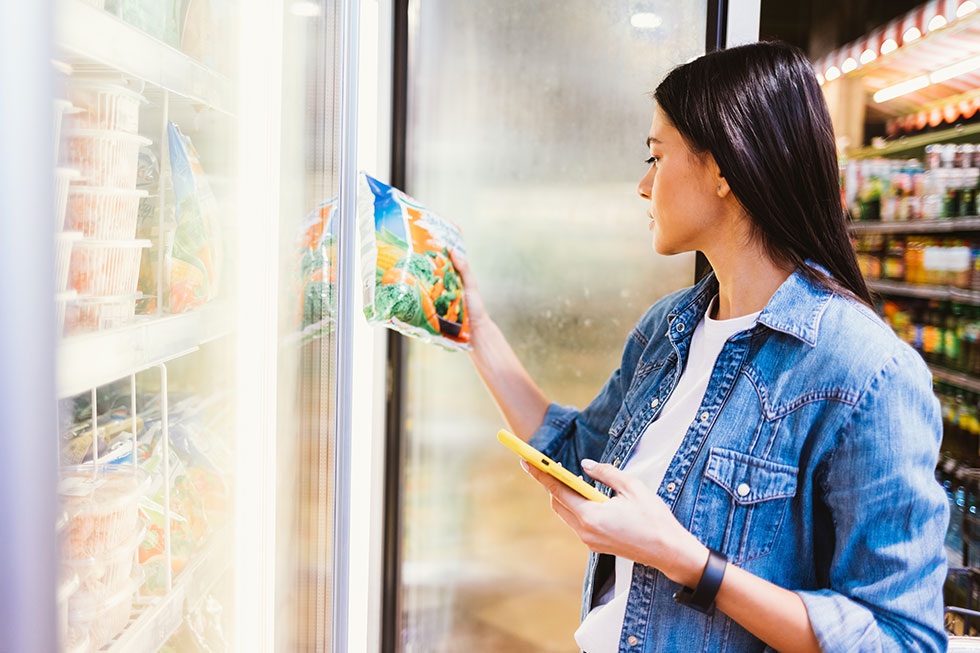
NFRA Report: How Frozen Foods Support Evolving Cooking Habits
The way Americans cook is evolving, and the freezer aisle is leading the charge. Once seen as just a place for convenience meals, today’s frozen options provide fresh-tasting ingredients, chef-inspired meals and budget-friendly solutions for every lifestyle. And with March as Frozen Food Month, it’s a great time to explore everything it has to offer.
“For decades, frozen foods have been a trusted solution for busy families, offering quality, variety and affordability,” said Tricia Greyshock, president and CEO of NFRA.
“From quick-prep meals to flash-frozen produce, frozen foods help consumers save time, reduce waste and enjoy delicious meals on their terms. March is the perfect time to explore the convenience and innovation happening in the frozen food aisle.”
Recent consumer research underscores the growing importance of frozen foods in American households:
- Seventy-one percent of shoppers favor ready-to-eat meal sections and quick prep options in grocery stores;
- Sixty-seven percent of consumers value better organization of ingredients for specific types of meals, reflecting how shoppers are using frozen items as building blocks for creative cooking; and
- Eight-three percent of shoppers say frozen foods make meal planning easier, reinforcing how essential they are for busy households.
Throughout March, retailers nationwide will offer special promotions, making it an ideal time for consumers to stock up on favorites and discover new options. NFRA’s Easy Home Meals website and social media channels will feature recipe inspiration that showcases the versatility of frozen foods for every meal occasion. Additionally, consumers can read the latest Easy Home Meals Registered Dietitian blog post: Celebrating the Benefits, Convenience and Innovation of Frozen Favorites.
Shoppers can also participate in NFRA’s $10,000 sweepstakes, with a chance to win one of 18 first prizes of $500 supermarket gift cards or the grand prize of a $1,000 supermarket gift card.
Feb 07 2025 
Over 90% of consumers use online and in-store to grocery shop: Report
A new report finds that more than 90% of shoppers participate in both online and in-store shopping. And additionally: that U.S. online sales for grocery is projected to reach $388 billion by 2027.
The report, “Digital Engagement Transforms Grocery Shopping,” was released by FMI—The Food Industry Association and NielsenIQ (NIQ) at FMI’s Midwinter Executive Conference. In 2017, FMI and NIQ predicted that by 2025, digitally engaged grocery shopper spending would reach $100 billion or 20% market penetration. This year’s report reveals that those projections were met and exceeded, with the report projecting U.S. online sales for grocery items to reach $388 billion or nearly 25% market penetration by 2027.
A new report finds that more than 90% of shoppers participate in both online and in-store shopping. And additionally: that U.S. online sales for grocery is projected to reach $388 billion by 2027.
The report, “Digital Engagement Transforms Grocery Shopping,” was released by FMI—The Food Industry Association and NielsenIQ (NIQ) at FMI’s Midwinter Executive Conference. In 2017, FMI and NIQ predicted that by 2025, digitally engaged grocery shopper spending would reach $100 billion or 20% market penetration. This year’s report reveals that those projections were met and exceeded, with the report projecting U.S. online sales for grocery items to reach $388 billion or nearly 25% market penetration by 2027.
“Digital engagement is no longer a complementary strategy, it’s essential to growth,” said Kim Cox, managing director, Omnicommerce at NielsenIQ.
Other key findings of the report include:
Online sales growth: Online sales growth exceeds that of in-store for food and nonfood categories, while in-store leads in total share
Youth purchasing power: Gen-Z begins its shopping journeys online and is heavily influenced by social media. Meanwhile, Millennials index highest for online purchasing
Social media ecommerce: Fifty-five percent of respondents now make direct purchases from social media or live-stream platforms for grocery and household items
Technology prioritization: Ninety-two percent of retailers are using technology, including AI, to personalize or customize shopping or marketing experiences, both online and in-store
Curbside pickup: Curbside pickup is used more often by shoppers at 31% of respondents, overtaking same-day home delivery, which has dropped to 29%
Oct 29 2024 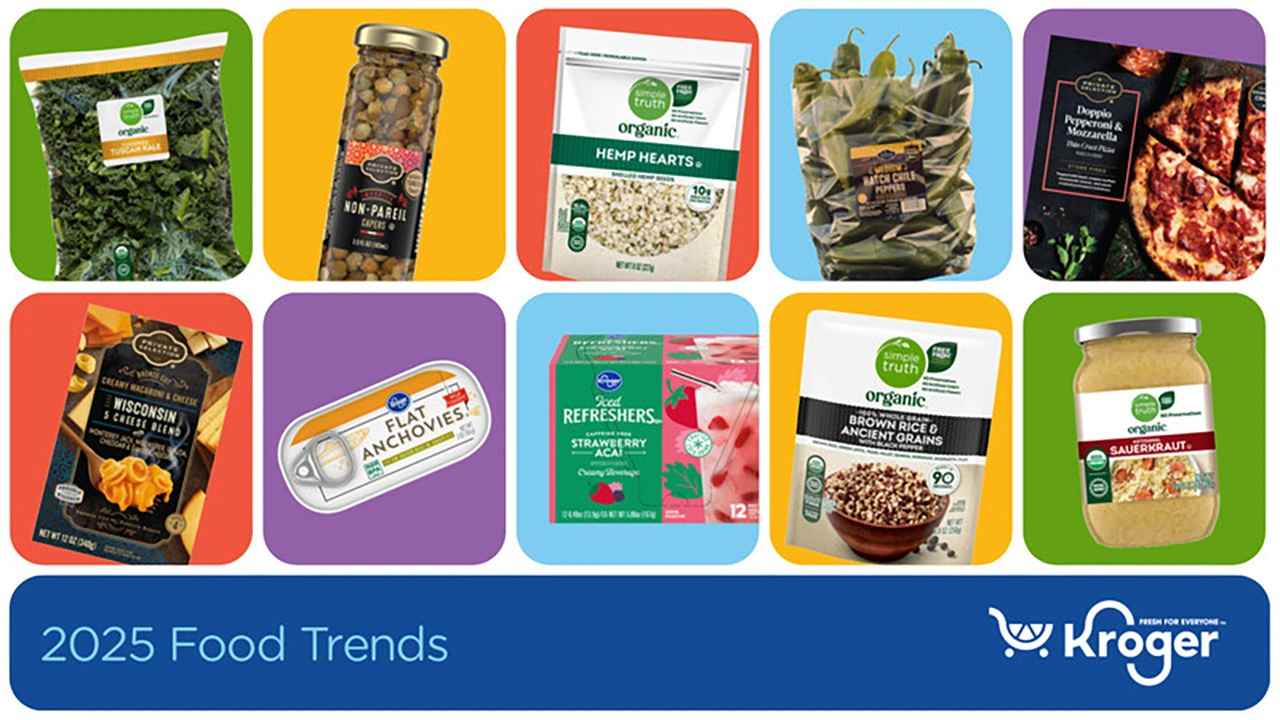
Kroger’s top 5 food trends in 2025
Kroger has released its top five food trends for 2025.
The trend predictions were developed by a slew of teams under the Cincinnati, Ohio-based retailer, including its Our Brands product developers, chefs, buyers, culinary specialists and Kroger retail data science arm, 84.51º.
The trends include:
Private label continuing to increase: Customers are increasingly turning to own brands. Kroger says shoppers will regularly choose store brand alternatives instead of national brands, and we’ll see continued private-label innovation to match the customer demand
Briny and fermented: Consumers want more acidic, briny and fermented flavors. In 2025 , the retailer says we’ll see an increased use of briny foods like olives, pickles, sauerkraut, and kimchi
Plant protein makes a comeback: While popular staples like chicken, yogurt, and cottage cheese have staying power, the retailer predicts a growing interest in collagen and a greater incorporation of plant-based proteins such as beans, lentils, and hemp seeds into daily diets
Peppers and spice: Customers shifted from chasing the highest Scoville ratings to now exploring how heat maximizes flavor. And delving into spices and peppers from international cuisines – like Calabrian chiles, guajillo peppers and hatch chiles – allows them to do so. As spice aficionados continue to experiment, expect emerging pepper varieties to appear in familiar products like wings, pizza, and pasta
Caesar flavoring: Following its viral “Caesar salad and french fries” moment, Caesar salad innovation is at an all-time high, Kroger says. Beyond traditional salads and wraps, recipes featuring Caesar dressing on pizza, pasta, and a variety of leafy greens beyond romaine lettuce are gaining popularity. Look forward to creative combinations of the umami-rich dressing with flavors like miso, tahini, and black garlic
Jul 23 2024 
Guilde Internationale des Fromagers Confrerie de Saint-Uguzon Paris, France Recognizes Cheese Professionals in Buffalo, NY

 BUFFALO, NY (July 11, 2024) – Roland Barthelemy, Prevot of Guilde Internationale des Fromagers traveled from France to recognize and induct ten cheese professionals in the United States on July 11, 2024 in Buffalo, NY during the 640th Chapter Induction at a ceremony during the annual American Cheese Society Conference. The individuals inducted are considered not only experts in the making of cheese, but also experts in the production, maturation and preservation of standards, quality and education of fine cheese. The honorees are exemplary individuals in their support, education and promotion of traditionally produced cheeses through many organizations.
Included are the finest cheese makers, cheese mongers, affineurs, distributors and retailers, all part of a group of dedicated culinary experts receiving the high honor. Seven individuals were recognized at the level of Garde et Jure, one promoted to Prud’homme and two honored as Maitre Fromagers of the Guilde Internationale des Fromagers. Inductees of the Garde et Jure level included: Bill Stephenson – KEHE, Portland, OR, Mark Finocchio – Pinnacle Food Sales, Coconut Creek, FL, Thomas Larochelle – LACTALIS, Sandwich, MA, Karri Zwirein – Northeast Shared Services, Buffalo, NY, Katie Losito – JASPER HILL FARM, Newark, VT, Sarah Hoffman – Green Dirt Farm, Weston, MO, Brian Wasik – WASIK’S Cheese Shop, Wellesley, MA. Promoted to Prud’homme Trevor Thomas – LACTALIS, Cameron Park, CA. Honored with title of Maitre Fromagers, Andy Hatch – UPLANDS CHEESE, Dodgeville, WI and Matteo Kehler – JASPER HILL FARM, Greensboro, VT . This induction celebrates the 22nd Anniversary of the first induction held in the United States and the 12th Anniversary of this chapter which consists of Australia, Canada, Mexico and the United States members.
The event sponsored by LACTALIS and the Australia, Canada, Mexico and United States Chapter, was held at the Buffalo Niagara Convention Center in Buffalo, NY. Following a 50 plus year tradition of pomp, the ceremony is complete with robes and a presentation of medals and certificates. Internationally renowned cheese expert and Prevot of the International Guilde, Mr. Roland Barthélemy, mastered the ceremonies and Cathy Strange, President of the Chapter representing Australia, Canada, Mexico and the United States and VP of Whole Foods Market, presented further remarks. The ceremony celebrated the Chapter of the Guilde 12th Anniversary and the contributions of all members. The Chapter Board includes President Cathy Strange of Whole Foods Market, USA, Vice President and Treasurer David Gremmels, Ambassador’s Stephanie Ciano of World’s Best Cheese, USA, Yannick Achim of Yannick Fromagerie, Quebec, Canada, Will Studd of Will Studd Cheese, Australia and Georgina Yescas of Lactography, Mexico City, Mexico.
Mr. Pierre Androuët, a cheese maker, created the Guilde des Fromagers and Confrerie of Saint-Uguzon in 1969 in Dijon, France epicurean and intellectual. The Guilde, for dairy professionals who were dedicated to preserving standards in cheese making throughout the world, and the Confrerie, for cheese aficionados and experts such as chefs, restaurateurs, food scientists and food journalists whose objective was to share their knowledge and the knowledge of the cheese makers.
Feb 19 2024 
Grocery Food Prices Remain on the Rise
The price for food at home increased 0.4% in January compared to December, marking the highest monthly increase in a year, according to the latest Consumer Price Index. Food at home has gone up 2.6% over the last 12 months.
The overall food index also rose 0.4% in the first month of 2024.
Four of the six major grocery store food group indexes increased in January. Cereals and bakery products was the only index showing a decline at 0.2%. The non-alcoholic index rose 1.2% for the month. The index for other food at home, which contains the index for sugar and sweets, fats and oils, and other foods, spiked 0.6%, while the fruits and vegetables index increased 0.4%. The index for dairy and related products edged up 0.2% in January. The index for meats, poultry, fish, and eggs went unchanged.
Meanwhile, the food away from home index rose 0.5% last month.
Overall the price of goods and services increased 3.1% in the 12-month period ending in January. Although it marks a decrease compared to December 2023, when the inflation rate was 3.4%, it is still above the Federal Reserve’s target of 2%. In response, the Fed has raised interest rates to the highest levels since the early 2000s.
Oct 17 2023 Top 2024 Food and Beverage Trends Revealed by Specialty Food Association Trendspotter Panel
 NEW YORK — The Specialty Food Association (SFA) Trendspotter Panel has predicted what will be hot in specialty food for 2024. Ranging from soup to cell-based meat and seafood to peach to value–and more–the Trendspotters have set their sights on a diverse list of trends for the $194 billion specialty food industry.
“Maximizing pleasure and minimizing stress, as one Trendspotter put it, encapsulates the panel’s picks for 2024,” said Denise Purcell, VP, resource development, for SFA. “Maximizing pleasure—in the forms of simple ingredients to global flavors to upscaling the everyday—and minimizing stress, whether that means slowing down, seeking convenience or value, helping to address environmental worries, or finding ways to boost health and mood, are all reflected in the emerging and continuing trends we expect to impact store shelves and restaurant menus in the coming year.”
Professionals from diverse segments of the culinary world comprise the SFA’s Trendspotter Panel: Patsy Ramirez-Arroyo, food & sustainability consultant; Melanie Bartelme, Mintel; Osei Blackett, chef/owner Ariapita and Everything Oxtail; Nicole Brisson, executive chef, Brezza and Bar Zazu; Mikel Cirkus, Foresight & Trenz, dsm-firmenich; Jenn de la Vega, Put A Egg On It; Jonathan Deutsch, Ph.D., CHE, CRC, Drexel University; Thomas Joseph, Martha Stewart and Sur La Table; Chala June, writer; Hannah Rogers, Foresight & Trenz, dsm-firmenich; Stan Sagner, founder, We Work for Food, LLC; Emily Schildt, founder, Pop Up Grocer; Kantha Shelke, Ph.D., CFS, IFT Fellow, Corvus Blue LLC; Kimberly Lord Stewart, food and health content specialist; V. Sheree Williams, The Global Food & Drink Initiative, Cuisine Noir.
Here are the eight trends the Trendspotter Panel anticipates for 2024:
TRENDING
- A bevy of beverages. Beverages are in the spotlight. Though a smaller segment than food, in many recent years beverage sales have grown at a faster pace, according to SFA’s State of the Specialty Food Industry research, fueled by innovation. “The coming year will boom with sophisticated tasting single-serve, non-alcoholic fizzy and non-fizzy drinks; and coffees, teas, and broths with functional ingredients for an additional boost of energy, clarity, focus, or calming effect,” said Trendspotter Kanta Selke. Expect minimal, if any, added sugar, salt, or synthetics as well as tropical flavors and herbs and botanicals from all over the world.
- Cell-based meat and seafood. Cell-based options will gain popularity in 2024 due to their sustainable and ethical production methods, addressing environmental and animal welfare concerns while offering a familiar taste experience to consumers, said Trendspotter Patsy Ramirez-Arroyo. Some trailblazing companies are creating the world’s first cultured burger and focusing on providing sustainable alternatives to traditional seafood products.
In a related trend, while last year the panel saw nontraditional seafood trending, a shift toward the growth of plant-based seafood overall is coming in 2024, with more companies working to perfect animal-free products that accurately capture the flavors and textures of seafood. “Historically, this has been a challenge for producers as the textures are particularly hard to mimic,” said Trendspotter Chala June. “But with advancing technology more brands are going to take a swing at it.”
- Peach. Some tried-and-true flavors never die but cycle back into the spotlight when the timing is right to reinvent or re-evaluate unexplored facets of that particular flavor. In the coming year, peach as a flavor and ingredient will excite consumers with some new variations and re-interpretation, said the panel. While increasingly used in traditional categories like jams and teas, peach is also showing up in condiments, sometimes offsetting another growing trend of chili peppers, and in baked goods like the 2023 SFA sofi Awards New Product winner, Peach-Lavender Bundtlet from Lily Maude’s.
- Calabrian chili peppers. Chiles continue to trend but the market has crested on Sriracha and Gochujang so marketers are eager for the next thing to capture imaginations and tastebuds. Calabrian chili peppers are appearing in both conventional and slightly unconventional products: pasta sauce, hot sauce, cured meats, snacks, relish, hot honey. “As most peppers are of Asian or Latin origins, these offer a cultural alternative to what has become commonplace,” said Trendspotter Stan Sagner. “Additionally, Calabrian peppers have a bright flavor that is quite appealing and lends itself well to a variety of dishes.”
- Tahini. Awareness of tahini as a flavor in its own right is a relatively fast-growing phenomenon. “It’s been increasingly viewed and applied outside of the Middle Eastern specialty lens, and being married to foods and beverages that are served in a more mainstream or non-adjacent capacity,” said Trendspotters Mikel Cirkus and Hanna Rogers. Noted examples are tahini milk shakes and coffees, cookies, and pastries featuring tahini popping up in metropolitan areas like New York, San Francisco, and Philadelphia.
- Soup. Soup recipes on TikTok are so popular the segment has been dubbed SoupTok, spurred on by the pandemic-era rise of the soup girlie and viral line, “Gorgeous, gorgeous girls love soup.” Unlike some TikTok food trends, soup has staying power. “Universal, warm, convenient. Never really goes out of style,” said Trendspotter Jenn de La Vega. Expect to see more soups, broths, and soup starters and mixes on shelves and menus.
- Black Sesame, ube, and milk tea. Three iconic Asian flavors will follow the path of matcha and continue to enter a more familiar sphere among makers and consumers. These flavors are cropping up in new and unexpected formats, such as the milk-tea–filled donut and ube hot chocolate from Bear Donut in the Penn District of NYC. “Ube’s fantastic color gives a pop of intrigue for consumers, and its flavor paired with creamier formats makes it irresistible,” said Cirkus and Rogers. The milk tea flavor lends itself well to baked goods but also salty and sweet snacks like Tochi’s Black Milk Tea Popcorn, which also contains black sesame. “Black sesame is especially one to watch, as it plays in a space of offering novelty and deliciousness across formats,” they added.
- Value. Consumers are watching their finances and value will be the name of the game. As people may need to make choices about how they spend their money, “brands that will successfully engage them will show shoppers what their products bring to the table. This may be versatile uses, low-stress flavor building or longer shelf life (yes, longer shelf life!),” said Trendspotter Melanie Bartelme. These attributes can help show consumers that these products are “worth” the cost.
CONTINUING TRENDS
Global flavor exploration. Not only is experimentation with flavors from around the world ongoing from a taste perspective, but consumers are open to richer cultural experiences from food, said the Trendspotters. “I see a continued increase in what I call heritage tradition foods, more small producers [around the globe] will continue to bring forth family recipes that are rich in flavors and stories that connect them to home and culture,” said Trendspotter V. Sheree Williams. As people explore, they are becoming more deeply aware of more obscure regional ingredients and recipes. “In all corners of the U.S., restaurants featuring lesser-known cuisines and specific dishes within those cuisines will prime consumers to realize that it’s actually quite easy and accessible to try new things,” said Bartelme. “People are understanding that cuisines are not monolithic,” added Sagner. “This trend is particularly evident in Asian packaged products (cooking sauces, seasonings, beverages, condiments, packaged noodles, etc.) that are appealing to both second generation and non-Asian customers. As for countries and regions in the forefront of U.S. consumer discovery? “Exploring African pantry items will also continue as brands educate the Western palate to African flavors and ingredients,” said June.
Elevated convenience. Consumers will continue to look for ways to make the most of the flavor and quality of their food and drink while becoming more open to using shortcuts that can help them easily achieve this. “There will be a newfound appreciation for, and celebration of, mixes, sauces, starters and more that consumers once chose to hide from their family and friends,” said Trendspotter Bartelme. Convenience extends beyond at-home meal prep. On-the-go, convenience will also continue to drive innovation with lives back to busy schedules. This holds for food and drinks, said Williams.
Upscaling the everyday. While inflationary pressures may have taken a bite out of restaurant dining, they continue to make the everyday at home a bit more special. Ingredients like high-end truffle salts, finishing oils, spice blends, and cultured butters elevate simple dinners at home to restaurant-style flavorful indulgences, said Trendspotter Jonathan Deutsch. One example is charcuterie boards, said Ramirez-Arroyo. They are everywhere, and their popularity is expected to endure in 2024, owing to their captivating visual appeal, cost-effectiveness, wide array of shareable spreads that foster communal dining, adaptability to diverse dietary preferences and ingredients, and alignment with the increasing demand for elevated, artisanal food displays at gatherings, whether casual or upscale.
Environmental impact. As important as food is its environmental impact. Sustainability, carbon footprint, and food waste concerns remain on the minds of a growing number of consumers. “Regenerative, upcycled, and sustainably packaged are not just buzzwords but keywords in consumers’ quests to eat well while doing good,” said Deutsch. Expect more focus on regenerative agriculture as those in food industries “focus on solutions to combat climate change,” said Williams.
Mushrooms are mushrooming. Mushrooms for taste, mushrooms for texture, mushrooms for health benefits. “People will discover mushrooms in every food and beverage category and product developers will find ways to weave in ancient wisdom into new craveable food formats,” said Shelke. In beverages, in particular, previous priorities have been caffeination, but now it’s more [mushrooms to address] relaxation, mood, and brain health. Drinks to wind down when the world is moving too fast,” said de la Vega. “Less of a focus on gut flora but more on skincare and the mind.”
